
PawsHub HK
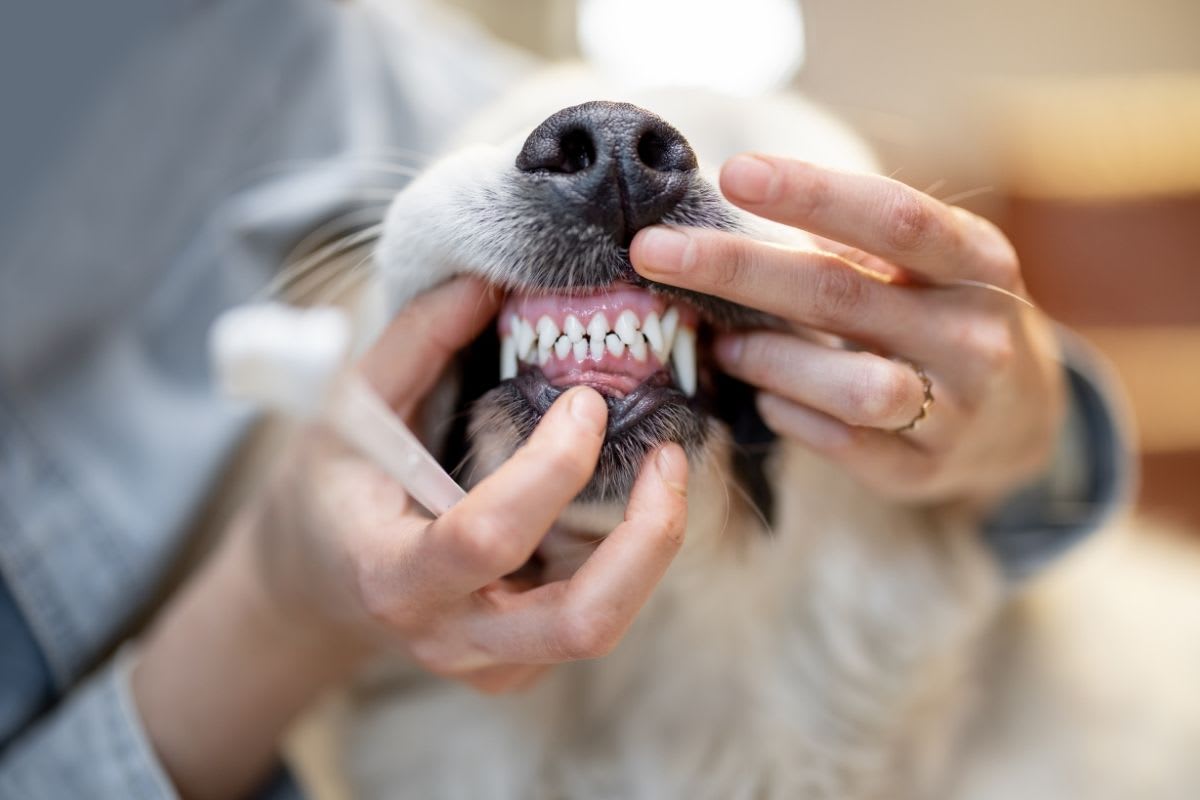
Your dog licks your face, you pet its head—this is the language of love you repeat every day. But in this back-and-forth, the bacteria in your mouths are quietly completing a two-way exchange. And the consequences of this exchange took researchers an entire study to fully understand.
In 2024, a South Korean research team conducted a study combining oral examinations and genetic analysis on 19 dog owners and their dogs. They sought to answer a seemingly simple question that almost no one had seriously considered:What impact does your daily intimate contact with your dog have on its oral health?
The results were more striking than anyone anticipated.
At the start of the study, veterinarians asked the owners a simple question: “How often do you brush your dog’s teeth?” Not a single owner answered “daily.” Only about 58% said they brushed once a week, while the remaining 42% brushed once a month or not at all. This finding prompted the research team to dig deeper—because the subsequent genetic analysis would reveal a truth most owners had never considered.
This is not a criticism, but a very common reality. Many owners know in their hearts that they “should brush their dog’s teeth,” but they often assume the dog will resist, they lack time, or “it looks fine,” so they keep putting it off. The problem is: dogs cannot tell you they have a toothache; they simply endure it silently.
In this study, veterinarians used two simple scores to assess each dog’s oral condition. You don’t need to understand medicine—just remember one thing:The lower the score, the healthier the teeth.
First Score: Dental Calculus Accumulation (0 to 3 points)
Imagine the thick layer of scale that builds up at the bottom of a never-cleaned kettle. When a dog’s teeth are not brushed, similarly hardened deposits gradually accumulate on the tooth surface. A score of 0 means completely clean, while a score of 3 means a thick crust has formed that even a veterinarian would need professional tools to remove.
Second Score: Gingival Inflammation Level (0 to 3 points)
This score assesses whether the gums are red, swollen, or prone to bleeding. A score of 0 indicates healthy pale pink gums, while a score of 3 indicates severe inflammation where the gums bleed at the slightest touch—similar to periodontal disease in humans.
The study found that dogs brushed once a week or more had an average dental calculus accumulation score of 0.74 points, and a gingival inflammation score of 0.54 points. For dogs that were rarely brushed, the two scores were 0.83 points及 and0.61 points
📌 Important Note

Although the differences in these numbers may seem small, it is important to note that all dogs had received a professional dental cleaning by a veterinarian before the study began. In other words, they all started from the same clean baseline. Even so, the dogs that were rarely brushed still had higher calculus and inflammation scores. If they had never received a dental cleaning, the actual situation would be even worse.
Every face lick is love—but also a moment of bacterial exchange between you
The study found that 15 out of 19 surveyed dogs (approximately 79%) had a habit of licking their owner’s face or mouth. For dogs, this is a natural way to express affection and seek connection. To them, every lick is pure love. But science tells us that each such intimate contact is also an opportunity for bacteria to flow bidirectionally between you. Using genetic analysis techniques, researchers identified the bacteria on the dogs’ tooth surfaces one by one. In samples from 10 dogs, they found a total of。
73 different bacterial species

. Among the most surprising findings was the discovery of a bacterium called *Streptococcus mutans*—one of the primary bacteria responsible for dental cavities in humans. The problem is that this bacterium is normally a “regular resident” of the human oral cavity, and a dog’s mouth is not typically a suitable environment for it. How did it get there?
Human “cavity-causing bacteria” had taken up residence in dogs’ mouths The researchers specifically searched for traces of this “human cavity bacterium” in the dental plaque of all 19 dogs. Ultimately, in2 dogs
In simple terms: When you kiss your dog every day or let it lick your face, it is similar to how family members transmit bacteria to one another through daily shared living. The more bacteria you have in your mouth, the more likely it is that your dog will harbor the same bacteria. This is not to tell you to stop loving your dog—but rather to remind you that the way you love your dog can be more thorough.
In addition to caries-causing bacteria, the study also found several other types of bacteria in dogs’ dental plaque that may, under certain circumstances, affect humans:
The presence of these bacteria does not mean your dog is sick, nor does it mean you will definitely be infected. For healthy adults with normal immune systems, the risk from daily contact with dogs is extremely low. The purpose of this information is to remind families with infants, the elderly, or immunocompromised members to pay extra attention to daily hygiene habits.
One detail in the study is more thought-provoking than any statistic: Among 19 owners, 12 were able to accurately assess whether their dog’s teeth were healthy. In other words, most owners actually have sufficient awareness.
However, the study also found that even when owners clearly knew their dog had dental problems, this “knowledge” did not lead them to brush their dog’s teeth more frequently. There is a deep gap between knowledge and action.
But the insidious nature of oral problems lies precisely in their “silence.” Tartar accumulates slowly, gums quietly become inflamed, and bacteria multiply between the teeth—until one day the veterinarian tells you, “Your dog needs a dental cleaning under general anesthesia,” and you realize the problem has been there all along.
Authors: Yu, J.S., Kim, M., Cho, I.H., Sim, Y.M., & Hwang, Y.S. | Published in: Veterinary Sciences, 2024, 11(2), 96 | DOI: 10.3390/vetsci11020096 | PMC ID: PMC10893504
Many people assume that if a dog’s teeth are bad, the worst outcomes are bad breath or difficulty eating. In reality, chronic gum inflammation can have profound effects on a dog’s overall health.
When gum tissue remains inflamed, the immune system stays in a constant “state of alert,” consuming significant energy. At the same time, the bone surrounding the gums may gradually deteriorate, potentially leading to loose teeth or even tooth loss over time.
More seriously, once bacteria from the oral cavity pass through the inflamed and damaged gums into the bloodstream, they can reach vital organs such as the heart and kidneys, causing more severe health problems. This risk is especially significant for older dogs.
The good news is that improving your dog’s oral health does not require you to become a veterinarian or purchase expensive supplements. It simply requires you to establish a few simple daily habits:
Your dog cannot say, “My tooth hurts,” or “I need you to brush my teeth.” It only knows that every time you come home, it rushes to greet you; every time you are sad, it snuggles up to you; every morning, it wags its tail with the greatest enthusiasm to tell you—you are its whole world.
Every time your dog licks your face, it is saying, “I love you.” And every time you pick up a toothbrush to brush its teeth, you are saying, “I love you too, and I prove it with my actions.”
Because your dog never makes you wait. And you should not make it wait either.