PawsHub HK
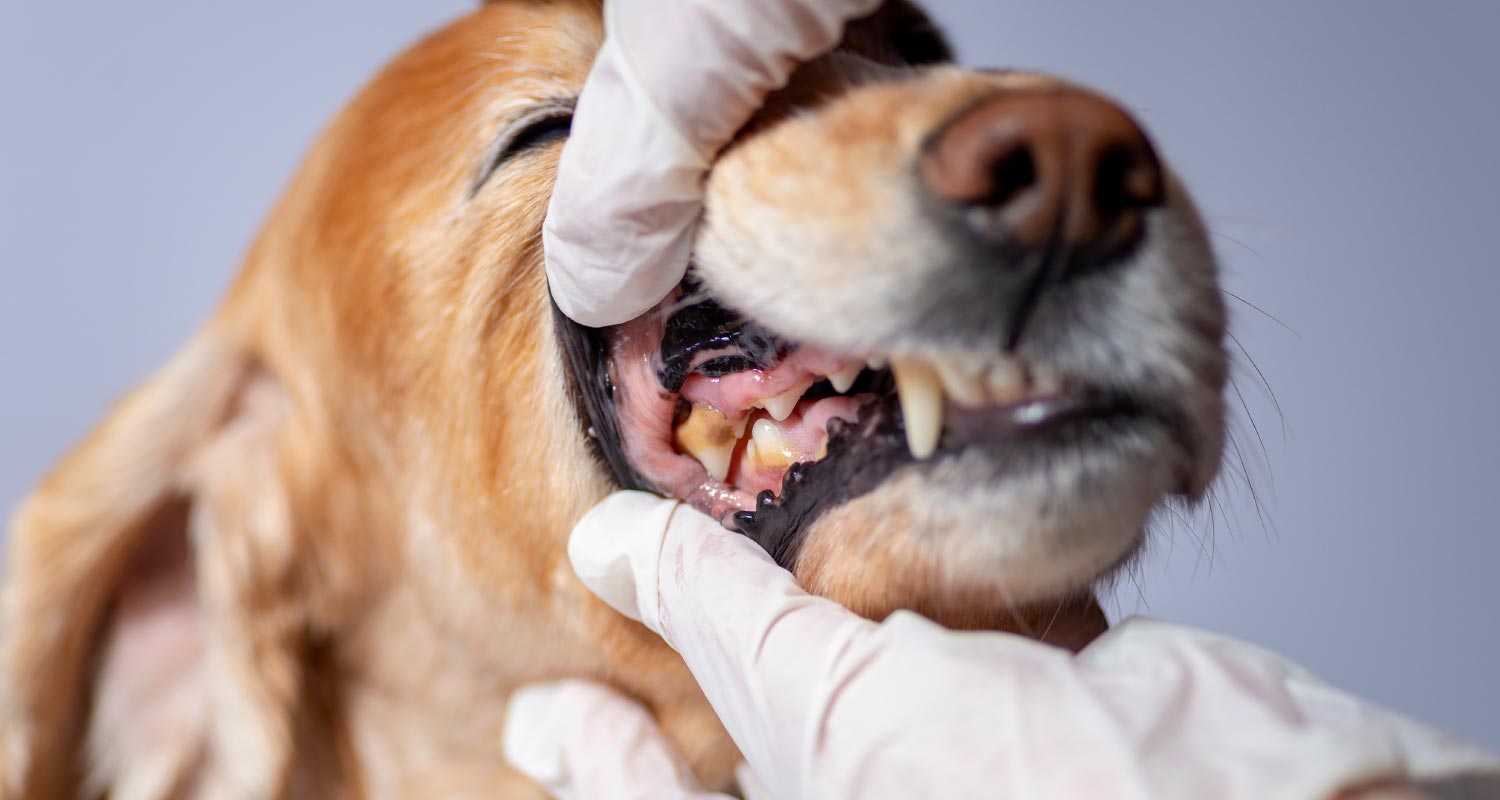
Every time you lean in to kiss your dog, are you put off by a certain "odor"?
Scientific research has found the answer, and the solution lies in saliva.
Two Japanese animal science studies tell us that the proliferation rate of oral bacteria far exceeds your imagination. Within just one week after dental scaling, bacterial counts can rebound to pre-scaling levels.
The natural defense components in saliva—lactoferrin and lactoperoxidase—are the key weapons in fighting this bacterial battle.
1 Week
🔬 The Hidden Superpower of Saliva—Understanding the "Lactoperoxidase System" in 4 Steps
Research from Gifu University found that dogs receiving only dental scaling without follow-up care (control group) experienced a rapid rebound in oral bacteria within the first week, returning to pre-scaling levels and maintaining that state for a full eight weeks. In other words,the effects of dental scaling are extremely short-lived,and if owners do not provide subsequent care, the results are nearly equivalent to having done nothing.
In contrast, the daily toothbrushing group maintained consistently low bacterial levels, significantly lower than both the control group and the toothpaste group. Toothbrushing has been confirmed to achieve a 70% bacterial reduction rate in humans, and this canine study corroborated the same high efficacy.
"Daily toothbrushing is currently the most effective method for controlling oral bacteria in dogs. For dogs that resist toothbrushing, products containing the lactoperoxidase system represent a scientifically supported alternative." — Adapted from Watanabe et al., J Vet Med Sci, 2016
The study utilized dielectrophoretic impedance measurement (DEPIM), which enables comprehensive detection of various bacterial species in the oral cavity, including difficult-to-culture bacteria, allowing bacterial counts to more closely reflect the true oral environment. This technology has also been widely adopted in human oral care research.

Although the toothpaste group (containing the lactoperoxidase system) still experienced a bacterial rebound in the first week, bacterial levels subsequently showed a steady downward trend and became significantly lower than the control group by weeks five to seven. The researchers explained that this is becausehypothiocyanite (OSCN⁻)—the antimicrobial substance generated by the lactoperoxidase-catalyzed reaction—requires a period of time to accumulate to a sufficient bactericidal concentration.
Even more noteworthy were the dental calculus index results: by week eight, the toothpaste group exhibited significantly lower calculus accumulation than the control group. This indicates that for dogs unable to tolerate toothbrushing, care products containing the lactoperoxidase system can indeed provide meaningful protection.
The study also confirmed that the effects of lactoperoxidase toothpaste alone are still inferior to daily toothbrushing. If your dog accepts toothbrushing, it should be the primary choice; lactoperoxidase care products are suitable as a supplement or alternative, particularly for brachycephalic breeds or dogs that resist toothbrushing.

Research by Morinaga Milk Industry brought encouraging news. They administered tablets containing lactoferrin and lactoperoxidase to subjects with halitosis, and results showed that within just 10 minutes,the concentration of volatile sulfur compounds (VSC)—the primary components of bad breath—was significantly lower than in the placebo group. A longer-term (8-week) follow-up study also found that the relative proportion of the periodontal pathogen P. gingivalis decreased markedly.
The study specifically noted that these effects are "equally applicable to pet oral health foods." For owners who interact closely with their furry companions daily, this is undoubtedly the most direct encouragement—every care action you choose for them brings visible change.
"The combined efficacy of lactoferrin and lactoperoxidase has been validated in human clinical trials, with researchers explicitly indicating its application potential extends to pet oral health products." — Adapted from Nakano et al., J Anim Sci, 2020
Dog halitosis is primarily caused by volatile sulfur compounds (VSCs) produced when anaerobic bacteria in the oral cavity (especially periodontal pathogens) decompose proteins. Studies indicate that 80% of dogs over three years of age suffer from varying degrees of periodontal disease, with halitosis often being one of the earliest symptoms to appear. *Porphyromonas gingivalis*)
Lactoperoxidase is a naturally occurring enzyme in saliva. It catalyzes the reaction between thiocyanate ions (SCN⁻) and hydrogen peroxide (H₂O₂) in saliva, generating hypothiocyanite ions (OSCN⁻) with potent antibacterial effects, thereby continuously inhibiting the proliferation of harmful oral bacteria. A Japanese study showed that dogs using toothpaste containing the lactoperoxidase system exhibited significantly lower dental calculus indices after eight weeks compared to the control group.
According to a 2016 study by Gifu University, if no follow-up daily care is provided after a dental cleaning, oral bacterial counts can rebound to pre-procedure levels within just one week. Therefore, dental cleaning is merely a starting point, and daily oral care habits are key to maintaining results.
For dogs resistant to tooth brushing, care products containing the lactoperoxidase system (such as oral care films or toothpaste) are scientifically supported alternatives. Petina Pet Oral Care Film combines lactoferrin and lactoperoxidase in an 8:1 ratio, applied daily to the gums for slow release of active ingredients, making it particularly suitable for brachycephalic breeds or senior dogs.
Lactoferrin is a protein with direct antibacterial and immunomodulatory functions; it binds to iron ions, depriving bacteria of the iron needed for growth. Lactoperoxidase, on the other hand, is an enzyme that generates OSCN⁻ through catalytic reactions to kill bacteria. The two coexist in saliva at an approximate ratio of 8:1, achieving optimal synergistic effects.